







How Web Design Affects SEO Rankings:
The Complete Guide for Better Visibility & Conversions
How Web Design Affects SEO Rankings: The Complete Guide for Better Visibility & Conversions
Many businesses invest heavily in SEO but overlook a critical factor: web design. You can have the best keywords, content, and backlinks—but if your website is slow, confusing, or poorly structured, your rankings will suffer.Search engines now prioritize user experience signals, meaning your design decisions directly influence visibility, traffic, and conversions.This guide breaks down exactly how web design affects SEO rankings—backed by real data and practical insights.
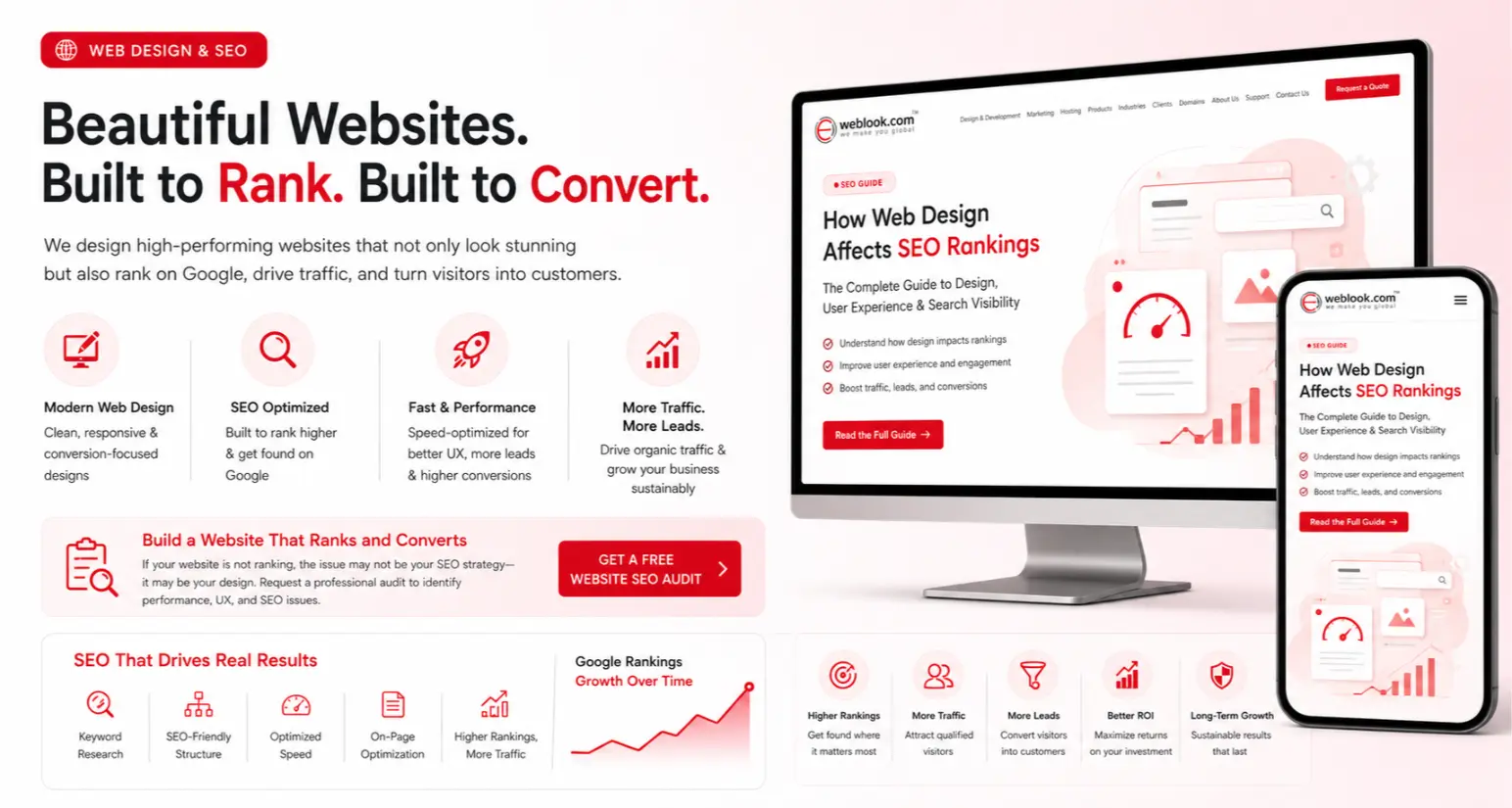
Table of contents Hide
Why Web Design Is Now a Factor to Improve SEO Rankings
Search engines have evolved significantly. SEO Rankings is no longer just about keywords—it’s about how users interact with your website.
Modern ranking signals include:
- Page experience
- Core Web Vitals
- Mobile usability
- Engagement metrics
A high-performing website will:
- Generate leads 24/7
- Build trust instantly
- Turn visitors into customers
Google uses these signals to determine whether your website provides value to users.
- Websites that deliver better experiences rank higher.
Key Statistics: Web Design & SEO Impact
Before diving deeper, here are critical insights:
- Page speed is a direct ranking factor
- Slow websites increase bounce rates and reduce engagement
- Core Web Vitals directly affect rankings and user experience
- Poor design can cause users to leave immediately, hurting rankings
The data is clear: design is not separate from SEO—it is part of it.
Need help generating more leads?

Website Speed and Core Web Vitals
Website speed is one of the strongest SEO signals today. Google measures performance using Core Web Vitals, which evaluate
- Loading speed (LCP)
- Interactivity (INP/FID)
- Visual stability (CLS)
Slow websites:
- Increase bounce rates
- Reduce engagement
- Lower rankings
Fast websites:
- Keep users longer
- Improve trust
- Increase conversions
Research shows that improving performance reduces bounce rates and improves engagement, both of which support higher rankings .
Bounce Rate and User Behavior Signals
Bounce rate measures how many users leave after viewing one page.
- High bounce rate = poor user experience
- Low bounce rate = strong engagement
Search engines interpret high bounce rates as a sign that users are not satisfied.
Confusing layouts, slow load times, or poor design often cause users to leave quickly, negatively affecting rankings
- Design directly influences whether users stay or leave.
Mobile-First Design and Indexing
Google uses mobile-first indexing, meaning your mobile version determines your ranking.
If your site is not optimized for mobile:
- Rankings drop
- Engagement decreases
- Conversions decline
Mobile-friendly design ensures:
- Faster loading
- Better navigation
- Improved usability
With most traffic coming from mobile devices, this is a critical factor.
Work With Experts Today

Website Structure and Crawlability
Search engines need to understand your website.
A well-designed structure includes:
- Clear navigation
- Logical hierarchy
- Proper heading usage
This helps search engines:
- Crawl your site efficiently
- Index pages correctly
- Understand content relevance
Poor structure can prevent pages from ranking even with good content.
User Experience (UX) and Engagement Metrics
Search engines need to understand your website.
Key signals:
- Time on site
- Pages per session
- Click behavior
Good design:
- Encourages exploration
- Improves readability
- Guides users toward action
Studies show that intuitive design increases engagement and reduces bounce rates .
Image Optimization and Visual Performance
Images affect both performance and SEO rankings
Unoptimized images:
- Slow down load time
- Increase bounce rates
- Reduce rankings
Optimized images:
- Improve speed
- Enhance accessibility
- Support SEO through alt tex
👉 Visual design must balance quality and performance
Technical Design and SEO Infrastructure
Design also impacts technical SEO.
Important elements include:
- Clean code
- Fast hosting
- Secure HTTPS
- XML sitemaps
These ensure search engines can properly access and index your site.
Build a Website That Ranks and Converts
Design also impacts technical SEO rankings
If your website is not ranking, the issue may not be your SEO strategy—it may be your design. Request a professional audit to identify performance, UX, and SEO issues.

Real Business Impact of Poor Web Design
Ignoring web design can lead to:
- Lower rankings despite strong content
- High bounce rates
- Lost leads and sales
- Reduced brand trust
Poor performance and slow loading create negative user experiences that directly impact conversions and revenue .
Common Web Design Mistakes That Hurt SEO
Slow Loading Pages
Heavy scripts, images, and poor hosting reduce performance.
Poor Mobile Experience
Non-responsive design leads to lower rankings.
Confusing Navigation
Users cannot find what they need.
Overuse of Animations
Heavy design elements hurt performance.
Lack of SEO Structure
Missing headings and internal links reduce visibility.
Best Practices for SEO-Friendly Web Design
To improve rankings and performance:
- Optimize website speed and Core Web Vitals
- Use responsive, mobile-first design
- Structure content clearly
- Implement strong internal linking
- Optimize images and assets
- Maintain clean technical architecture
These practices align design with SEO requirements.
Future of Web Design and SEO
Web design and SEO are becoming more integrated.
- AI-driven search algorithms
- UX-focused ranking signals
- Core Web Vitals importance
- Real user experience data
Search engines are moving toward evaluating real user behavior, not just technical optimization.
Conclusion
Web design is no longer just about aesthetics it is a core part of your SEO strategy.
A well-designed website:
- Improves SEO rankings
- Increases traffic
- Enhances user experience
- Drives conversions